


Recently, I saw and enjoyed What We Did Before Our Moth Days, the latest of many wonderful collaborations over the decades between director André Gregory and playwright Wallace Shawn. (If you’re in the NYC area, do yourself a favor and see the show. If you’re as lucky as I was, Gregory and Shawn will be in the audience kibitzing together. If so, invite them to dinner after the show.)
I’m curious about both creative longevity and collaboration, so I read their Vulture interview with interest. These two have been making great work together for almost six decades. Here’s Gregory on one aspect of their approach:
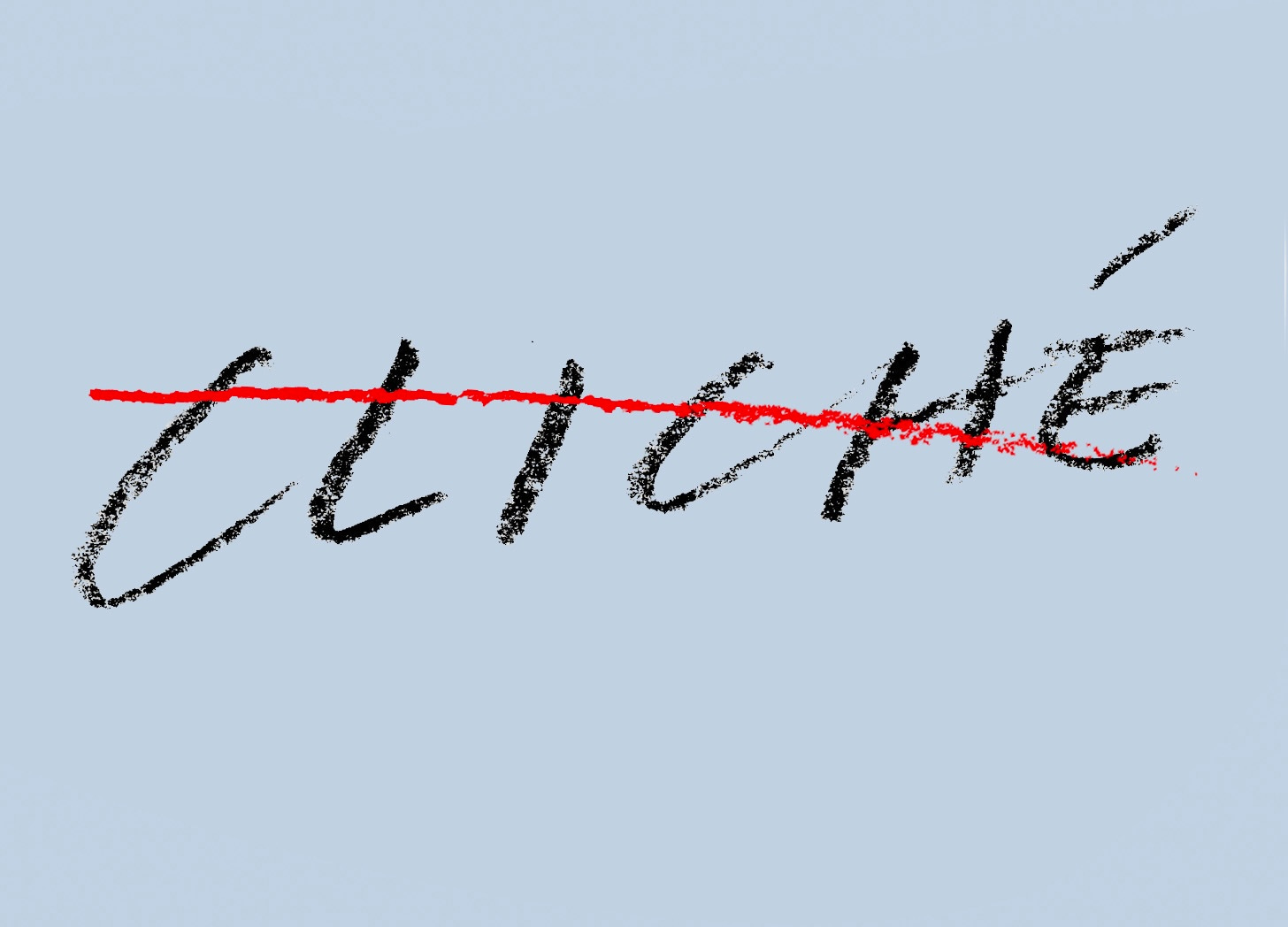
We’ve seen so many movies. We’ve seen so many plays. So over time, like taking away from a piece of marble in a sculpture, you are getting rid of the cliché.
(For more of Gregory, I recommend This is Not My Memoir, his memoir.)
This advice is common: cut away the cliché, obvious, and predictable, and you’ll be left with the truth. How? Consume voraciously until your ear is so precisely tuned to the familiar that you can spot and excise it with a surgeon’s precision.
What gets left out is the excruciating process of quarrying that block of flawed marble in the first place. Trying to avoid clichés as you write is the process also known as Crippling Writer’s Block.
Willem Defoe, another veteran of the downtown theater scene, offers a useful corollary to Gregory’s advice:
I always like this idea of trying to fail … Just think about that. Try to make a bad painting. Try to act badly. Try to be lousy in that scene. It’s interesting … It does something. You’ve got to find ways to let you not worry and be free.
What I loved most about Moth Days was its simplicity. Four seated characters, very little movement. It’s essentially a series of extended monologues. No fancy or contrived language, and a simple plot, if you can even call it that. Yet all three hours felt fresh and surprising.
Also, effortless: The dialogue never sounded “worked over.” Every line landed as nothing more than the most direct and straightforward way to say that particular thing out loud. But experience has taught me that effortless-sounding writing is the hardest to achieve. The effort of effortlessness, that striving impulse toward perfection can be detrimental. Here’s Defoe again:
You need enough to get you in movement and get you trying things, but you don’t need so much that it suffocates you, that you’re uptight. So sometimes I flirt with ideas of fucking things up or not being hard on myself. Also, you put yourself in situations where you can’t control things. And that’s why people say, ‘Oh, that’s so risky.’ It’s only risky if it’s not risky.
If you’re familiar with Dafoe’s work, you know he is absolutely fearless on stage and in front of the camera. That’s because he considers avoiding risk the only real danger to his work. It’s only risky if it’s not risky.
If you don’t give yourself room to fail, nothing happens, which is deadly to any work of art: “If it’s a real risk,” Defoe says, “you’re trying something. Something will happen. Something will be learned.”