


My wife and I begin each morning with coffee and Connections, the New York Times word grouping game. Then, at the gym, I work my way through the Midi, the Mini, Wordle, and Strands. Much easier on the brain than doomscrolling.
Lately, however, I’ve developed a new interest in Spelling Bee, a particularly maddening puzzle with one of the weirdest and most confounding word lists of any similar game I’ve played. Each one looks like this:
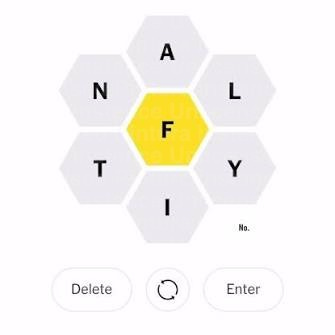
The goal is to spell as many words as possible. The only rule is that each word must include the center letter: FALL, but not TALL. And, ideally, you achieve the pangram by using all the letters at once: FAINTLY.
Unlike Andy Samberg, I don’t have the patience to max out at “Queen Bee” status every single day. But I regularly achieve the Genius level now, all because of a new approach I’ve taken to the challenge: Instead of bulldozing my way through the obvious words and then giving up in frustration, I poke and prod at Spelling Bee gently, putting it down and picking it up throughout the day without letting myself get too frustrated. Each time I stop, I’m fairly sure I’ve tried every single possible combination of letters. Each time I pick it up again, a few more words have miraculously become obvious to me.
I learned this little trick from my writing practice: Over the years, I’ve learned that it never pays to force my way through a problem. When a concept refuses to gel or a sentence stubbornly resists untangling, I move elsewhere, loosely, without self-judgment or angst. I might work on the outline a bit, or spend time culling through research. When I return to that sticky spot later on, more often than not that thorny part has resolved itself in my mind. As with the Spelling Bee, I find that the answer was staring me right in the face all along.
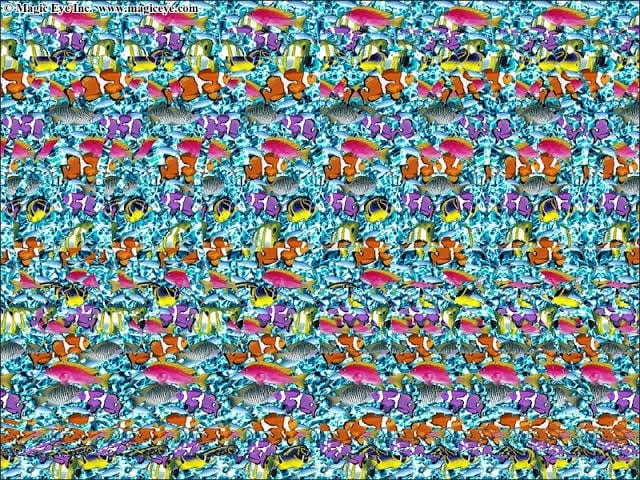
I’m not working these out the way I would a math problem. Instead, it feels very much like that moment when I unfocus my eyes and the three-dimensional image abruptly materializes:
A shower, a long walk, a household chore: Any quiet, lightly distracting activity does the trick, something that takes my conscious mind off the puzzle but doesn’t dominate my attention. That means no video games, books, or television. My conscious mind needs a rest, but my unconscious needs to work, and it can't untwist a mangled paragraph while my head is busy with firefights and plot twists.
Of course, this doesn’t mean I bail the minute things get difficult. Writing is often difficult. Instead, I wait for that molasses-like feeling, the sense of profound certainty that I’ve explored every option, that all is lost, and that I should pack up and go home. Rather than descend into bitterness and frustration, I decide it’s time to, literally, walk away from the problem.
Also: FINALITY. Really enjoy your columns!